
Every season, the gap between potential and production gets smaller, and FloRugby’s Top 50 Rugby Union Prospects list continues to track the players already closing it.
The first two installments revealed prospects ranked from No. 50 to 36, then No. 35 to 21, highlighting emerging talents across Europe, the Southern Hemisphere and key development pathways around the world. Now, the focus shifts to players ranked from No. 20 to No. 11, where projection starts to meet proven impact.
- More Information On Investec Champions Cup On FloRugby
- More Information On PREM Rugby On FloRugby
- See Every Rugby Europe Match Streaming On FloRugby
This group is defined less by promise and more by presence. Many are already contributing at senior level, influencing matches in major competitions and forcing their way into deeper club and international conversations. Whether it is dynamic halfbacks dictating tempo, back three players breaking games open, or forwards shaping collisions and control, these are players already shifting outcomes.
Several names in this bracket have moved beyond age grade dominance and into meaningful professional roles, while others are on the verge of doing so. What unites them is trajectory. Their development is not theoretical. It is visible week to week.
This is our list of players ranked No. 20 to No. 11, a group with fewer unknowns, greater expectations and far less time before those expectations are tested at the highest level.
To qualify for the list, players must meet three key criteria.
Each prospect must be under 23 years old at the start of the 2026 calendar year, have fewer than five senior international caps, and be in a position to make a meaningful impact for both club and country before the 2027 Rugby World Cup.
Top 50 Rugby Union Prospects
20. Efraín Elías
Secondrow | Stade Toulousain | Argentina
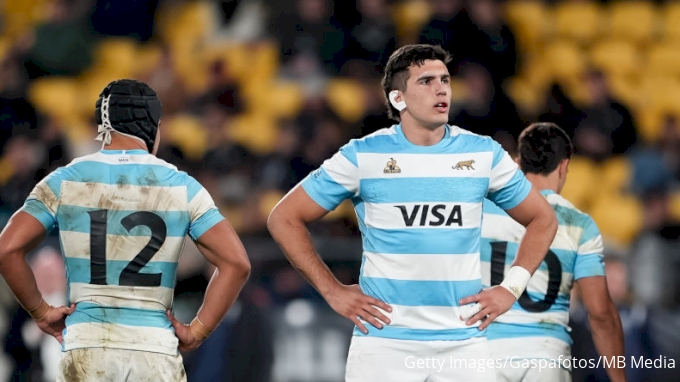
Efraín Elías is the type of forward Argentina keeps producing, but even within that production line, he stands out. Ranked No. 20 on FloRugby’s Top 50 rugby prospects list, the Toulouse lock has already made the jump from age grade standout to full international in remarkably quick time.
At around two meters tall, Elías brings the physical edge expected of an Argentine second row, but his game is built on more than size. He is an aggressive carrier, a relentless defender and a lineout presence growing into a genuine set piece leader.
His rise began in Córdoba, where he developed through the Jockey Club system before stepping into the Argentina under 20 setup. Across three seasons at that level, he became a central figure, eventually captaining the side at the 2024 World Rugby Under 20 Championship. That leadership role was no accident. Elías consistently set the tone physically and carried himself like a senior player even in junior competition.
What elevated him beyond prospect status was his impact with Dogos XV in Super Rugby Americas. In his debut season he helped drive the side to the final. A year later, he went one step further, playing a key role in their title-winning campaign while collecting multiple player-of-the-match performances. That stretch showed he could dominate not just his age group, but seasoned professionals as well.
Toulouse moved quickly to secure him in 2024, recognizing both his current level and long-term ceiling. The transition into one of Europe’s most demanding environments is significant, but also a natural fit for a player whose game is built on physicality and work rate.
International recognition followed just as quickly. Elías was called into Argentina’s Rugby Championship squad in 2024 and made his Test debut against New Zealand, a clear signal of how highly he is rated within the national setup.
What makes Elías particularly valuable is his blend of edge and engine. He does the hard work in tight exchanges, but is equally effective getting around the park, hitting rucks, making tackles and offering himself as a carrier late into phases.
Still only 21, Elías already looks like a forward built for Test rugby. With experience in South America, exposure to the Top 14 and early caps for Argentina, he is firmly tracking toward becoming a key figure in the Los Pumas pack as they build toward the 2027 Rugby World Cup.
19. Aidan Boshoff
Wing | Bristol Bears | Wales
Aidan Boshoff plays the game like someone who has never been told to slow down. Ranked No. 19 on FloRugby’s Top 50 rugby prospects list, the Bristol Bears winger has quickly built a reputation as one of the most instinctive and fearless young finishers in the Premiership.
Born in Abergavenny before spending much of his childhood in Cape Town, Boshoff brings a blend of Welsh grit and South African edge to his game. That background shows up every time he gets the ball in space. He is direct, aggressive and constantly looking to beat defenders rather than avoid them.
Boshoff’s rise has been rapid. He made his Bristol debut at just 17 years old in the Premiership Rugby Cup, immediately marking himself out as a player the club trusted despite his age. Since then, he has transitioned from raw academy prospect to a genuine first-team option.
Standing around 1.85 meters and weighing just over 90 kilograms, he has the physical tools to match his intent. He is quick enough to finish in space, but what separates him is his work rate and willingness to get involved. Whether chasing kicks, coming off his wing to carry infield or pressing aggressively in defense, Boshoff looks for work.
His development has been clear across the 2025 to 2026 season. He scored his first Premiership try against Northampton Saints and followed that with a breakthrough moment in Europe, crossing for his first Investec Champions Cup try on his first start in the competition. Those are the markers that show a young player beginning to translate potential into production.
At international level, Boshoff has been a consistent presence for Wales under 20, featuring in multiple Six Nations campaigns and at the World Rugby Under 20 Championship. While he is yet to break into the senior side, his trajectory suggests that step is not far away.
There is also a noticeable edge to how he carries himself on the field. Coaches at Bristol have highlighted his hunger and intensity, traits that often separate good prospects from genuine internationals.
Still only 20, Boshoff is far from the finished product, but the foundation is clear. He is a high-energy, high-impact winger who thrives on involvement and does not shy away from the physical side of the game.
If he continues on this path, it will not be long before he moves from promising talent to a regular name in both Premiership and international conversations.
18. Teddy Wilson
Scrum Half | Waratahs | Australia
Teddy Wilson falls into both categories scrum halves usually inhabit, organizer and threat. Ranked No. 18 on FloRugby’s Top 50 rugby prospects list, the Waratahs number nine is quickly emerging as one of the most complete young halfbacks in the Southern Hemisphere.
Wilson plays with tempo first and foremost. His instinct is to speed the game up, challenge defensive edges and keep forwards honest around the breakdown. When he sees space, he goes. When he does not, he still asks questions. That constant pressure is what makes him so effective.
At 1.82 meters and just over 84 kilograms, he is not the biggest scrum half, but he is tough, durable, and far more physical than his frame suggests. His background in boxing shows up in his competitiveness and composure. He is comfortable in contact, sharp in tight spaces and rarely rushed when the game speeds up around him.
A product of the New South Wales pathways and The King’s School, Wilson captained Australia under 20 in 2023, underlining his leadership credentials early in his career. That same authority has begun to carry into his professional game.
His development at the Waratahs has been steady but significant. Debuting in 2022, he spent time learning behind established options before taking advantage of increased opportunities in 2025. With more minutes came more influence. His running game became a genuine weapon, particularly around the fringes, while his control and decision-making continued to evolve.
There are flashes in his game that hint at a higher ceiling. A length-of-the-field team try finished by Wilson during the 2025 season showcased his support play and awareness, while his selection for Australia XV against Japan highlighted how quickly he is moving into the national conversation.
He also brings pedigree. His father, David Wilson, was a World Cup winner with the Wallabies in 1999, but Teddy is carving out his own identity. Where his father thrived in the collisions, Wilson thrives in the chaos around them.
What stands out most is his balance. He can manage a game when required, but he is at his best when he is probing, sniping and forcing defenders into decisions they do not want to make.
Wilson is already pushing toward higher honors. With his combination of speed, control and competitiveness, he looks every bit like a future Wallabies scrum half as Australia builds toward the 2027 Rugby World Cup.
17. Atunaisa Sokobale
Loosehead Prop | Castres Olympique | Fiji
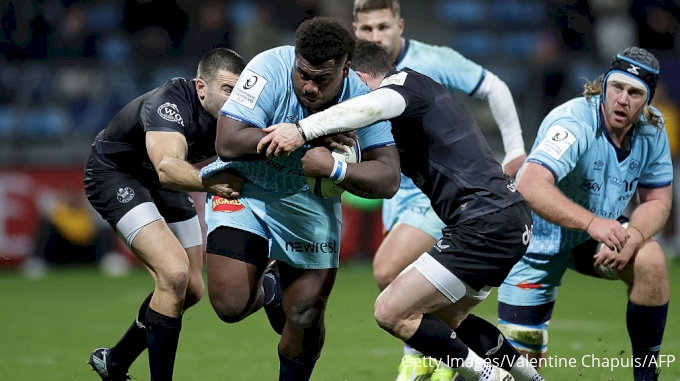
There are not many 20-year-old props built like Atunaisa Sokobale. The Castres loosehead, ranked No. 17 on FloRugby’s Top 50 rugby prospects list, is part of a new wave of front rowers redefining what the position can be.
At first glance, it is the size that stands out. At just under 1.90 meters and around 110 kilograms, Sokobale has the frame to anchor a scrum. But what he does beyond the set piece is what separates him. He carries like a back rower, accelerates like a loose forward and plays with an intent that immediately shifts momentum.
His performance against Munster in the Champions Cup was the clearest example yet. Matched up against seasoned international opposition, Sokobale did not just hold his own, he imposed himself. In the scrum, he was solid and technically sharp. Around the park, he was relentless. A 20-meter break in the first half swung momentum and underlined his ability to influence games in open play, something few props can do consistently at that level.
What makes Sokobale particularly intriguing is how quickly he has adapted to elite rugby. Moving to France at a young age, he has already forced his way into the Castres rotation and earned exposure in both the Top 14 and European competition. That is not a common pathway for a 20-year-old front rower, particularly one coming out of Fiji’s system.
There is also a raw edge to his game that suggests significant upside. His background as a shot put athlete is evident in his explosiveness and leg drive, especially in contact. When he carries, he does not just absorb defenders, he moves them.
International recognition has already followed. Having debuted for Fiji, Sokobale is now firmly in the conversation as part of the next generation of Flying Fijians front rowers. With established names ahead of him, his development will likely be managed carefully, but the trajectory is clear.
The modern game demands more from props than ever before. Mobility, handling, and defensive work rate are no longer optional. Sokobale ticks those boxes already and is still refining the fundamentals of his core role.
If his progression continues at this rate, he will not just compete for Fiji’s starting loosehead jersey ahead of the 2027 Rugby World Cup, he could make the number one shirt his own.
16. Dylan Pledger
Scrum Half | Highlanders | New Zealand
Dylan Pledger does not look like the prototype modern scrum half. That is exactly why he stands out. Ranked No. 16 on FloRugby’s Top 50 rugby prospects list, the Otago and Highlanders halfback belongs to a long New Zealand tradition of smaller nines who control games through speed, accuracy and intelligence.
At just over 1.70 meters and around 75 kilograms, Pledger is not winning many physical mismatches. Instead, he wins moments. His pass is sharp, his tempo is relentless and his understanding of space is advanced well beyond his years.
Everything in his game is built around speed of thought. His service from the base is crisp and consistent, allowing attacking shapes to function at full pace. More importantly, he recognizes when to break structure. If a defensive pillar overcommits or a ruck guard is slow to reset, Pledger is gone.
His rise through the New Zealand system has been rapid but earned. A standout at King’s High School in Dunedin, he transitioned seamlessly into representative rugby, becoming a key figure for New Zealand under 20 across the 2024 and 2025 cycles. His performances there underlined his ability to control matches against elite opposition.
At provincial level, he quickly established himself as Otago’s starting halfback. During the 2025 NPC campaign, he was central to their run to the final, dictating tempo and contributing points through his support play and opportunism around the breakdown.
There is a clear stylistic influence in his game. Like Aaron Smith, another Otago product, Pledger thrives on speed of delivery and accuracy of execution. He keeps forwards moving, stretches defensive lines and rarely lets the game stagnate.
The major setback came just as his career was accelerating. An ACL injury in early 2026 ruled him out for the entire season, delaying what looked set to be his Super Rugby breakthrough with the Highlanders. It is a significant interruption at a crucial stage of development.
If anything, the injury reinforces how highly he was rated. He was not just another squad option. He was expected to feature.
The key question now is not talent, but timing. If he returns with the same sharpness and confidence, Pledger still projects as a long-term contender in New Zealand’s halfback depth chart.
Players like this do not rely on size or power. They rely on feel, tempo, and decision-making. Those traits tend to translate. If his recovery stays on track, Pledger has all the tools to reassert himself and push toward the highest level, challenging the current All Black options of Cam Roigard, Cortez Ratima and Finlay Christie.
15. Junior Kpoku
Second Row | Racing 92 | England
Junior Kpoku looks like he was built for Top 14 rugby. At 2.04 meters and close to 120 kilograms, the Racing 92 lock has the frame that immediately catches the eye. What makes him one of the most intriguing forwards on this list, ranked No. 15, is how quickly he has learned to use it.
Kpoku is not just big, he is disruptive. He thrives in the collisions, whether at the set piece, the breakdown or in open-field defense. There is a nastiness to his game that suits the French league perfectly, something he openly admits he had to develop after arriving as a teenager. The transition was not subtle. The Top 14 demands confrontation on every phase, and Kpoku has leaned into that environment rather than being overwhelmed by it.
What stands out is how early he has earned trust. Racing is not short on second-row depth, yet Kpoku has forced his way into meaningful minutes, starting games and competing with established internationals for selection. That does not happen unless a player is delivering consistently in training and backing it up on matchday.
His versatility adds another layer. While primarily a lock, he has been used across the back five of the scrum, offering lineout presence, physical carrying and defensive edge wherever he is deployed. He is not a finished lineout technician yet, but the raw materials are obvious.
There is also a level of maturity in how he has navigated his career so far. Leaving England early, adapting to a different rugby culture and settling into a multilingual environment could easily stall a young player. Instead, Kpoku has used it as fuel. Fluent in French and embedded in the Racing system, he has become a connector on and off the field, not just another young import.
His England under 20 pedigree reinforces the point. A key figure in a World Championship-winning side, he showed then what he is now proving at senior level: he can match power with work rate and intent.
The next phase of his development is refinement. The physicality is already there. The consistency of his decision-making, his lineout detail and his overall control of the game will determine how far he goes.
Right now, Kpoku looks like a forward learning his trade in one of the toughest environments possible and coming out of it sharper, harder and far more complete than when he arrived.
14. Hassiem Pead
Scrum Half | Emirates Lions | South Africa
Hassiem Pead does not just play fast, he makes everyone else look slow. Ranked No. 14 on FloRugby’s Top 50 rugby prospects list, the Emirates Lions scrum half is one of the most electric young players in the game right now.
What separates Pead immediately is his ability to break a match open from nothing. His acceleration is sharp, his footwork is unpredictable and his instinct to attack is relentless. Around the fringes, he is a constant threat. If a defender hesitates, even for a second, Pead is through.
That attacking edge was on full display during the 2025 World Rugby Under 20 Championship. Six tries in five matches only tells part of the story. He dictated games, controlled tempo and repeatedly exposed defensive systems with his running threat. Breaking a long-standing record for meters gained by a scrum half in the competition underlines just how dominant he was.
Reducing him to just a running nine would miss the bigger picture. Pead’s control is just as impressive as his explosiveness. His pass is clean, his decision-making is sharp and he understands when to inject pace and when to manage it. In the final against New Zealand, when space tightened, he showed composure and game awareness well beyond his years.
At around 1.75 meters and 77 kilograms, he is not the biggest scrum half, but like many top nines, he plays bigger than that. His defensive work rate is high, and he is not afraid to put himself into collisions despite the size difference.
His transition into senior rugby is already underway. Minutes with the Lions have been managed, often from the bench, but even in short bursts he has shown he can impact matches. Two tries in limited game time point to how quickly he adapts when given opportunity.
There is also a confidence to his game that stands out. Not arrogance, but belief. He backs his instincts and plays with freedom, something that cannot be coached.
South Africa has traditionally favored control and kicking from the nine position. Pead offers something different. He brings chaos, tempo and genuine attacking threat.
Used correctly, he is not just a player who fits into a system, he is one who can change how a team plays altogether.
13. Jon Echegaray
Full Back | Union Bordeaux Bègles | France
Some players arrive in professional rugby and take time to adjust. Jon Echegaray did not wait around. Ranked No. 13 on FloRugby’s Top 50 rugby prospects list, the Bordeaux full back has already shown he can turn opportunity into impact almost instantly.
His breakthrough tells you everything. Five tries in his first five Top 14 appearances is not just form, it is instinct. Echegaray has a natural feel for space that cannot be taught. He tracks the ball well, reads broken play early and arrives exactly where he needs to be, often before defenders realize the danger.
The headline moment, a try after just ten seconds against Perpignan, was not a fluke. It was a snapshot of how he plays: alert, aggressive and ready to exploit any lapse from the opposition.
At 1.84 meters and 90 kilograms, he has the physical profile of a modern full back, but his game is built more on awareness than raw power. He glides rather than forces, picking angles that open up space instead of trying to run through it.
What stands out is his attacking intelligence. Whether joining the line or counterattacking from deep, Echegaray consistently makes the right decision at speed. He knows when to inject himself and when to stay connected, a balance many young back three players struggle to find.
His contributions are not limited to finishing. Comfortable stepping in at first receiver, he adds another layer to Bordeaux’s attack, offering distribution and composure in wider channels. That versatility makes him more than a support runner. He becomes part of the system.
At age-grade level, his performances for France under 20 backed up the hype. Scoring freely in the Six Nations and contributing to a title-winning campaign, he showed he could deliver in structured environments as well as open play.
There is still growth ahead, particularly in his aerial game and defensive positioning under pressure, but the foundation is strong.
Echegaray looks like the type of player who does not need volume to influence a match. Give him one moment, one broken phase or one misread defensive line, and he will take it.
12. Paul de Villiers
Back Row | DHL Stormers | South Africa
Paul de Villiers does not waste movements. Everything he does has purpose. Ranked No. 12 on FloRugby’s Top 50 rugby prospects list, the Stormers flanker has quickly developed into one of the most efficient and disruptive young forwards in the United Rugby Championship.
He is not the biggest back rower on paper, standing around 1.80 meters and just over 100 kilograms, but he plays like a forward who is far bigger. His impact comes from timing, accuracy, and an engine that does not switch off.
The numbers back that up. High tackle counts, consistent turnovers and a strong carrying output tell the story of a player involved in everything. But the more important detail is how those contributions come. De Villiers is rarely late to a breakdown, rarely out of position and rarely ineffective when he arrives.
That breakdown presence is the foundation of his game. He is aggressive over the ball, technically sharp and relentless in his efforts to slow or steal possession. It is the kind of work that does not always make highlights, but shifts momentum over the course of a match.
With ball in hand, he is direct and efficient. He is not a flashy carrier, but he consistently wins the gainline and generates post-contact meters. More importantly, he understands when to carry and when to link, keeping attacking phases alive rather than forcing low-percentage plays.
His rise through the Stormers system has been swift. A former South Africa under 20 captain, he transitioned into senior rugby and immediately looked comfortable. When opportunities opened up in the Stormers back row, he did not just fill a gap, he made the role his own.
There is also a clear leadership edge. Even at a young age, he communicates well, organizes those around him and sets a standard through his work rate. Coaches trust players like that quickly, and it is no surprise he has become a regular presence in the matchday squad.
What makes de Villiers particularly valuable is his reliability. In a position often defined by chaos, he brings control. He does the hard work repeatedly, with minimal drop-off, and allows others around him to play with more freedom.
He is not built on hype or highlight moments. He is built on consistency, and that is exactly why his influence keeps growing.
11. Marko Gazzotti
Back Row | Union Bordeaux Bègles | France
Marko Gazzotti plays like a back rower who is permanently on fast forward. Ranked No. 11 on FloRugby’s Top 50 rugby prospects list, the Bordeaux loose forward has already shown the blend of power, pace and edge that makes him one of the most dangerous young forwards in Europe.
At 1.92 meters and 110 kilograms, Gazzotti has the build to dominate collisions, but the real point of difference is how quickly he gets into them. He covers ground like a much lighter player, hits rucks with force and carries with the sort of acceleration that can turn a routine phase into front-foot ball in an instant.
That athleticism is what makes him such a difficult matchup. He can play No. 8, blindside or openside, and whichever role he fills, the impact tends to look the same. He wins meters after contact, gets over the ball aggressively and has the engine to stay involved across 80 minutes. For a young forward, that all-action profile is rare.
Gazzotti first came onto the wider radar at Grenoble, where he was already handling senior rugby before most players his age had even left academy systems. Bordeaux moved quickly to sign him in 2023, and the transition has only sharpened his game. Surrounded by elite talent and playing in a more demanding environment, he has looked increasingly comfortable rather than overawed.
His age-grade pedigree only reinforced the point. A standout in France’s Under 20 setup, he was one of the defining players of their World Rugby Under 20 Championship-winning side in 2023. He did not just fit into that team, he drove it. The following year he remained firmly in the national conversation and eventually broke through for his senior France debut.
There is a reason coaches trust him early. He does not play like a passenger. He plays like someone trying to force the game to bend his way.
Bordeaux have clearly found a forward capable of shifting momentum with one carry, one breakdown steal or one defensive shot. For France, Gazzotti looks less like a long-term project and more like a player already starting to demand bigger stages.
How To Watch Rugby Matches In The United States On FloRugby
Professional club rugby in Europe all streams on FloRugby and the FloSports app in the United States. FloRugby and FloSports also are the U.S. home to:
FloRugby also is home to match archives and match replays.