Ireland vs. Japan: Three Key Takeaways For Andy Farrell's Side
Ireland vs. Japan: Three Key Takeaways For Andy Farrell's Side
Ireland beat Japan 41-10, but line-out struggles, selection headaches and halfback competition steal the narrative. Andy Farrell faces big calls.
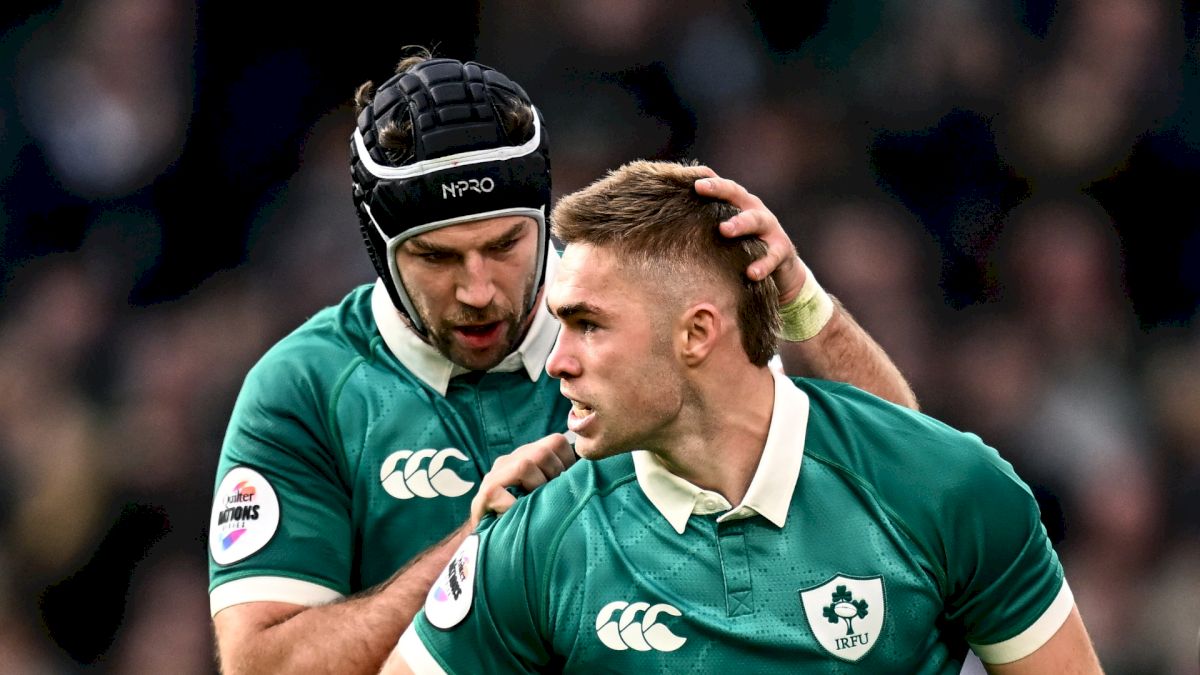
Andy Farrell’s Ireland got back to its winning ways with a 41-10 win over Japan at the Aviva Stadium in Dublin.
Overcoming a sluggish start, in which the line-out once again misfired, Ireland grew in confidence as the contest progressed.
Netting an early penalty through Jack Crowley, Ireland had to wait until the 19th minute to score its first try when Crowley finished off a superb team move.
Ironically, the score came from a platform that started with clean line-out ball, further highlighting Ireland’s need to rectify its issues in that area.
- Subscribe To FloRugby To Watch England A Vs. South Africa XV
- World Rugby Rankings: Where Things Stand Before The Autumn Nations Series
- The 100 Best Rugby Players In The World: The Full List
Ten minutes later, Ireland would score a rather opportunistic try through backrow Nick Timoney, who took an offload from James Ryan, before racing away for the score.
The try came at a moment when the Irish attack once again had broken down.
Japan closed out the half as the brighter of the two sides when hooker Kenji Sato barged over from a rolling maul.
Interestingly, the match officials did not feel it necessary to check the score, despite question marks being raised by the Irish players.
The score injected life into the visitors, who quickly went on the offensive.
Compounding Ireland’s issues, Jacob Stockdale was shown a yellow card after being wrong-footed out wide and making high contact on Kippei Ishida.
Down a player, Ireland conceded a penalty just before halftime and carried a 17-10 lead into the break.
Showing resilience, Ireland shut down Japan to start the second half, with Andrew Porter hitting a sharp line at pace to barge over.
Now enjoying some daylight, Farrell rang the changes, which instantly upped the tempo.
Leading the charge were Gus McCarthy, Paddy McCarthy, Cian Prendergast and Jack Conan, who each thundered over the gainline, providing a platform for Ireland to attack with improved structure.
The Irish back line took full advantage, with Sam Prendergast finding his passing range on multiple occasions.
On the subject of Gus McCarthy, the 22-year-old hooker immediately steadied the Irish line-out.
Such was his impact that the Irish attack looked significantly more cohesive, with McCarthy himself dotting down from a maul in the 66th minute.
Ireland would add two more tries to put further gloss on the scoreline.
Paddy McCarthy powered over from close range, and Tommy O’Brien raced down the right-hand flank after an excellent Sam Prendergast pass.
Now on the board in November, Ireland faces far sterner tests in the coming weeks, with Australia and South Africa making the trip to Dublin.
Here are the key takeaways for Andy Farrell’s side:
Changes Needed At Line-Out Time
At test level, it almost beggars belief that Ireland still is struggling as significantly at line-out time.
The Irish hookers have gathered much of the criticism since 2023, perhaps not always fairly, but the reality is that this now is a deep-rooted issue in the Irish game.
At a level arguably higher than any other Tier 1 nation, Ireland’s attack is built on quality line-out possession.
Highlighting this fact was Jack Crowley’s opening try, which was launched directly from clean line-out ball, allowing Ireland to attack with tempo and timing.
Closing out the match with an 82% line-out success rate simply is not good enough for Ireland.
The contrast when Gus McCarthy took over the darts was striking, with Cian Prendergast quickly becoming his primary target, and Ireland’s attacking flow improving almost instantly.
The big question now is whether the pairing should move straight into contention to start the next two matches.
Offering genuine versatility, the older Prendergast brother covers lock and all three back row positions, making him a valuable option regardless, but that flexibility should not count against his prospects of starting in his own right.
Blindside flanker looks the most natural fit.
Despite a high ceiling, Ryan Baird has not yet delivered the consistent impact required to lock down the No. 6 jersey, potentially opening the door.
Prendergast also brings a welcome edge, a controlled aggression and physical attitude that Ireland could benefit from in tests that promise more collision and confrontation.
If Baird were moved to the bench, Ireland would still retain a powerful option capable of covering both second row and back row. His size, pace and physical profile would be well-suited to injecting late tempo and punch when games begin to fracture.
At hooker, Dan Sheehan remains Ireland’s undisputed first choice, even accounting for occasional inconsistency at line-out time this season.
Behind him, however, Gus McCarthy has made a compelling case to push Ronan Kelleher hard for the No. 16 jersey.
There is little between them in general play, but given the scale of Ireland’s set-piece issues, the line-out alone could shift the conversation in the weeks ahead.
The Irish pack also is clearly lacking the ballast and dominance that Joe McCarthy brings in tight, with James Ryan not yet back to his influential best.
While stylistically very different, Munster’s Thomas Ahern offers a profile unlike anything else in the depth pool. At 6-foot-10 and 120 kilograms, with exceptional pace and handling for his size, he remains a unique athlete in Irish rugby.
Were Farrell to make a bold selection call, picking Ahern would send a clear and deliberate message about Ireland’s intent to evolve physically and dynamically.
Irish Distribution Game
The injury to Jamie Osborne in the 65th minute is a significant setback for Ireland.
Linking effectively with Crowley as a second distributor, Osborne showed he is capable of far more than the traditional “goalkeeper” fullback profile.
His ability to hit passing lanes on time, launch accurate long-range passes and ease territory pressure with a reliable kicking game gave Ireland a more layered attacking picture.
Looking long-term, that skill set could translate seamlessly to inside center, particularly when Hugo Keenan and Mack Hansen return to re-establish competition for 15.
Speaking post-match, Farrell confirmed the worry around the injury, saying: “You could see by the way he was holding his arm. I thought he might have broken something, but it’s the shoulder we think was out of place, and it's back in place now.”
Losing Osborne when his influence was expanding the Irish attack is a heavy blow. His combinations were beginning to develop into a meaningful attacking weapon for the remainder of the November tests.
With Osborne now sidelined, Jimmy O’Brien looks the most likely option to take the 15 jersey next week. Although he has not been in favor since 2023, his distribution tools have always set him apart, and this may prove an opportunity for him to reassert his value in that area.
Irish Halfback Debate Rages On
The most heavily debated Irish jersey of the past 18 months has been the No. 10 shirt.
Jack Crowley succeeded Johnny Sexton in 2024 and played a central role in Ireland’s Six Nations success before a dip in form, heavily influenced by instability at the provincial level.
Sam Prendergast then took the reins during the 2025 Six Nations, impressing early, before shouldering his own form inconsistencies, leading to Crowley being reinstated for the November window.
The two operated in contrasting conditions against Japan.
Crowley spent his stint playing behind an inaccurate set-piece and a high-energy Japanese side determined to disrupt tempo. His physicality at the line, willingness to carry into contact and ability to play on the gainline were clear positives.
Aside from a missed conversion and a clearance kick that failed to find sufficient distance, his kicking, on the whole, was effective. However, both Crowley and Prendergast failed at times to exit long enough to deter Japan from launching quick line-outs, which will be an area of focus moving forward.
Despite a scrappy platform, Crowley showed he can steer Ireland through disorder without abandoning structure.
Prendergast entered the fray as the contest opened up, thriving from the front-foot platform created by the Irish forwards.
His passing range repeatedly unlocked space, including the assist that sent O’Brien clear.
His tempo and decision-making continue to trend upward, though, like Crowley, his kicking game was a mix of promise and work in progress.
Ireland remains well stocked at 10, with two young pivots developing on parallel trajectories. Behind them, Ciarán Frawley waits for an opportunity, while Jack Murphy and Harry Byrne are quietly elevating their games at the provincial level.
At scrumhalf, Craig Casey produced a solid performance despite operating behind set-piece instability. He was tidy around the breakdown, quick to distribute and applied smart pressure with his box kicking. That said, it was not the type of outing that would realistically unseat Jamison Gibson-Park in the pecking order.
Off the bench, Caolin Blade struggled to impose himself and occasionally disrupted timing by taking a step too many at the breakdown or behind the scrum. To his credit, he grew into the contest, but with provincial No. 9s pushing strongly across the country, his path back into the Six Nations picture looks increasingly steep.
How To Watch Rugby Matches In The United States On FloRugby
Professional club rugby in Europe all streams on FloRugby and the FloSports app in the United States. FloRugby and FloSports also are the U.S. home to:
- United Rugby Championship
- PREM Rugby
- Top 14
- Investec Champions Cup
- EPCR Challenge Cup
- Currie Cup
- Super Rugby
- And more
FloRugby also is home to match archives and match replays.