Amanda Martinez lives with her parents in Riverside, Illinois — a small suburb outside of Chicago. She wakes up at 5:30, prepares three meals, and drives an hour to North Central College in Naperville.
Martinez, 26, gets her first workout at 8 with a scheduled partner, lifts, eats, and, if she has free time, works a DoorDash shift. She practices again in the afternoon, eats, coaches at West Suburban Girls Wrestling Club, and arrives home at 10:30.
This has been Martinez’s life for the past four years since reaching the finals of the National Collegiate Women’s Wrestling Championships for the Cardinals in 2020 and 2021. Her goal is to become a World and Olympic champion, and this is how she makes it happen.
“I want to do those things,” Martinez said. “In doing those things, I think I’ll be able to see myself at my full potential. This sport shows you so many parts of yourself.”
Due to her age, Martinez just left her parents’ health insurance plan. Reaching Final X and being second on the National Team means an extra $750 a month and health insurance through USA Wrestling. Getting picked up by Titan Mercury Wrestling Club was “life-changing” since tournament travel is covered.
Her financial formula is simple:
— $3000 to $5000 a year club coaching
— $3500 a year from North Central
— $10,000 a year from Door Dash ($100 to $300 per week)
Martinez will pick up other odd jobs here and there, and she might do a summer camp or two, but her focus is wrestling. Living with her parents keeps expenses low, but she still has student loans, some of which she can’t pay right now.
“There are times when I’m broke and I have no money, but then I think of the problems normal people have during their day-to-day life and I love that this is my problem,” Martinez said. “I get to work out for a living and explore the world. I love it. I love being on the mat, and I love doing it.
“The reason I’m doing this isn’t for the money, so I’m not basing my plan around that. I can get a job. I used to work at one of the restaurants by the school. If I needed to do it, I would. I think that’s where most of the girls are, too. If they need money, they’re going to find a way to get it. It’s not hard to get another job. It’s hard to get something that works with your schedule.
“If I could just have money, that would be awesome. If I have to work a little bit to do what I love, I’ll do it.”
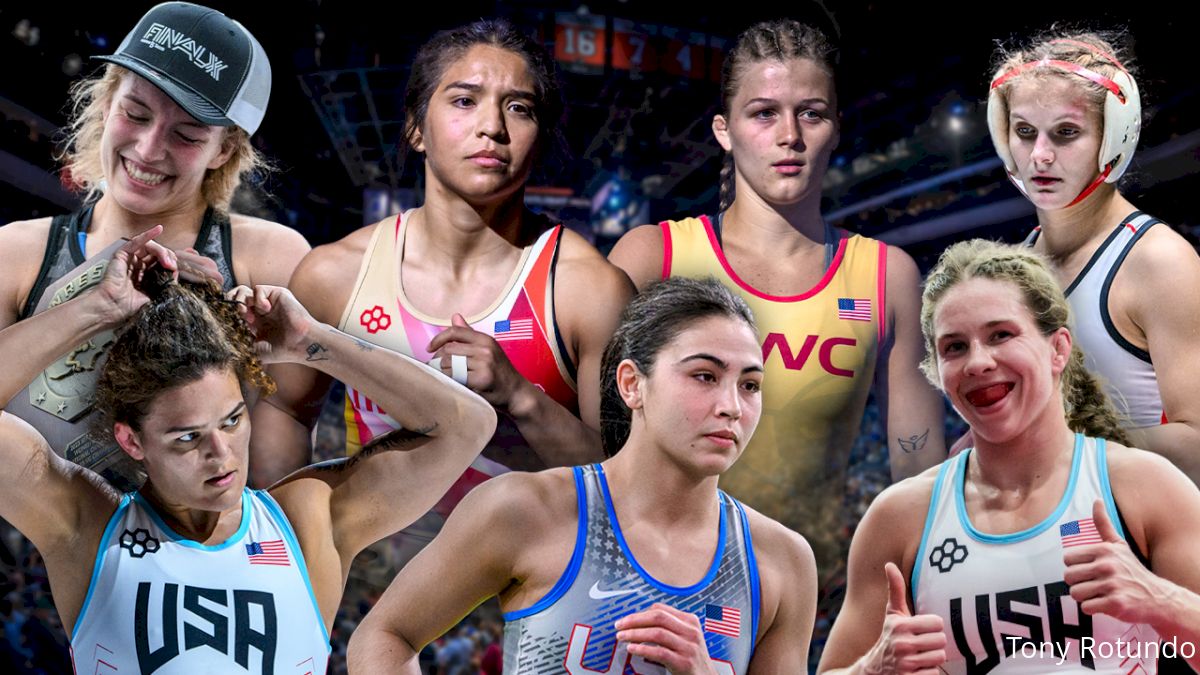
Below are additional insights from Martinez, along with Alara Boyd, Kendra Ryan, Abby Nette, Ali Howk, Solin Piearcy, and Kayla Miracle — in their own words — about how they make a living and the challenges they face.
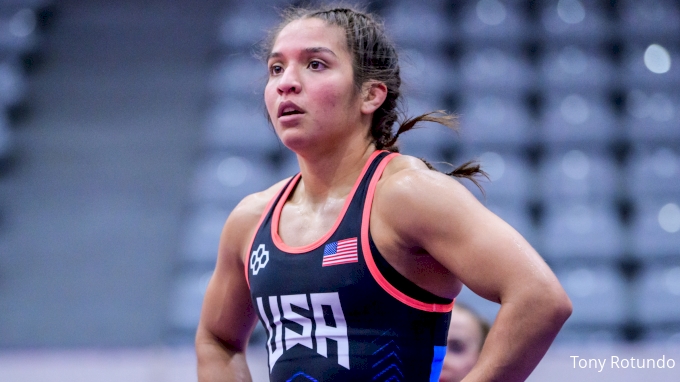
Amanda Martinez works DoorDash shifts to make enough money to live and compete.
Making A Living
Alara Boyd, 24, 4x All-American, third on the National Team at 62 kg
“Last year was different from my current situation. I was a graduate assistant and got a stipend through the school. Amanda and I ran a kids' club. I do some social media stuff for my mom’s company, Plato’s Closet (a consignment store). I do a lot of camps in the summer, so that helps a lot.
“Last year was harder. I had to get a job and I was working seven to eight hours a day at Smoothie King, then I had to get physical therapy, and then I had practice. It was a lot. I wasn’t able to fully dive into my wrestling, especially with PT and coming back. I needed to make money to live. The past year wasn’t as bad because I saved my money during the summer, and I made a lot during camps. I still have to budget, but it’s not too bad.”
Kendra Ryan, 22, 4x All-American, third on the National Team at 50 kg
“I work a decent amount. I have two jobs. I’m a personal trainer at The UFC Gym. That’s newish. I just started that. I’ve been working at a restaurant for the past three years. That’s how I get by for now. I hope to make more money now. It’s nice to be on the National Team. Thankfully, both my jobs are good about my training schedule and my wrestling schedule. They work with me a lot.
“I graduated with a degree in exercise science. I’m studying to become a certified personal trainer. I’m sort of a waiter. Sometimes I cook. In the summer, I do some camps. It’s weird."
Ali Howk, 25, 2022 U23 World bronze medalist, previous National Team member at 55 kg
"Being on a National Team from 2023 to 2024, that year is a little easier. I was getting a stipend from USA Wrestling and my old sponsor, Sunkist Kids. That was nice, but outside of that, you get a little crafty. My summer camps hold me off for the year. I do a ton of camps. I travel from June to August. This summer, I’m not traveling as much. I typically travel all over the place and run a ton of camps and one-on-ones. That’s the bulk of it. You can earn bonuses at different USA Wrestling events as well as overseas. You can earn a bonus from USA Wrestling and Adidas as well.
Howk got married on July 5, 2025
“We combined our finances a few months ago since my money from camps was starting to run out, and I had to pay for more of my travel. I’m grateful he works a full-time job, and I’m learning how to live on a combined income and finances. It takes a big burden off since I don’t have to worry about paying rent. I know that will be covered. I’ll at least have money coming in. When you go to these tournaments, it determines if you’re going to get a paycheck or not. You don’t want it to be an incentive or anything like that, but it’s nice when you can go and compete well, and you could get a paycheck.
Kayla Miracle, 29, two-time World silver medalist, two-time Olympian, second on the National Team at 62 kg
“I knew with Sunkist Kids ending, that post-Olympics, I had to have something figured out financially. Wrestling is not a super-funded sport.
“I knew I had to figure out how to pay my bills, so I got back from the (2024) Olympics on Wednesday, and the next Monday, I was in the classroom teaching (at Valiant College Prep in Arizona). They found out I was a math major. I had already trained with them. They welcomed the senior-level athletes. Teaching math became a reality when I had to make a decision.”
Solin Piearcy, 26, 2x college national champion, previous National Team member at 68 kg
“I graduated and had some of our career development network help me get in touch with the company (Trans FX) that I’m still currently working at, as I’ve been competing at the senior level. It’s a remote job. I’m able to travel, train, and compete at a high level while still being able to manage my work-life balance and have an income. I’m fortunate in that regard, and for me it’s been working the past five years.
“I am blessed and grateful for my family’s support. While I’m training and traveling, my home base is still at home with my parents and my family. I don’t have to pay for room and board or rent, so that helps, especially in the Bay Area.
Abby Nette, 28, 2022 World Teamer, second on the National Team at 59 kg
“I had to join the US Army. I had to sign a contract. I’m at their beck and call. Financially, I’m pretty comfortable as a women’s freestyle wrestler. Out of most female wrestlers at the senior level, I would say WCAP wrestlers are the most financially well off.
“It’s a regular salary. We get paid every two weeks. It depends on your rank and your years of service, but each year my paycheck goes up. We’re just as comfortable as school teachers, if not more comfortable than school teachers. It depends on whether you’re smart with your money and if you can save each month, but most people in WCAP have bought a house already. I don’t want to live in Colorado after my career is over, so I decided not to buy a house. I live in an apartment with two cats pretty comfortably. I can afford to do things on the weekend and afford to go on a trip if I want to.”
National Team Funding
The top three wrestlers at each weight are on the U.S. National Team
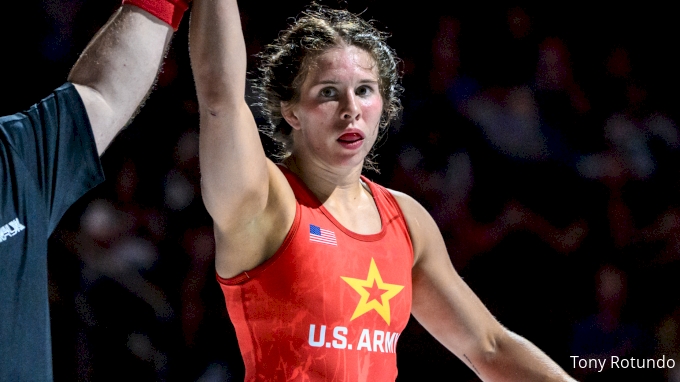
Abby Nette competes for the Army's World Class Athlete Program, where she receives a salary to wrestle and train.
Health Insurance
Martinez: No. 1 and 2 (on the National Team) get health insurance, so this is my first year of getting on that. I need to get some things looked at (now that I have health insurance through USA Wrestling). When I’m at the school, I can talk to the athletic trainers there. They don’t have to help me, but they do. It would be nice to have rehab plans set for me, but I can’t do it because I can’t afford it.”
Ryan: “I’m still under my parents because I’m 22.”
Howk: “When you’re second on the National Team, you get health insurance. I can go to the Olympic Training Center to get some things taken care of. I’m on my parents’ health insurance until I’m 26, so I’m still on their insurance. I’ll be on my husband’s health insurance when I get married.”
Piearcy: “That’s a huge thing turning 26. That’s one of the main reasons I’m still with this company. Thankfully, they have a really good health-benefits plan for me. I had surgery last year on my thumb and, thankfully, I didn’t have to pay too much out of pocket. I’m fortunate for that because if I didn’t have this job and had to undergo that surgery on my own, it would be a little tough.”
Nette: “We have TRICARE as a US Soldier. Right now, we are on active duty orders. Most of us are National Guard soldiers, but we are on active duty orders in the WCAP program. We get active duty pay. If you make National Teams, you have that as well. Sometimes that’s a better option than TRICARE because the USOPC works with the athletes directly. Sometimes it’s better to go through the USOPC if you have that option.”
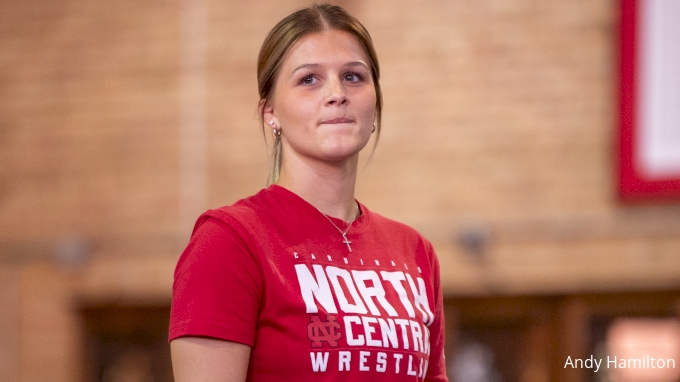
Alara Boyd makes most of her money through wrestling camps, one-on-ones, and helping her mom's business. She moved back to Muncie, Indiana, to live with her parents so she could save on rent. Boyd will drive to North Central periodically to train. She worked at Smoothie King last year.
Challenges
Martinez: “The first year was really hard because I was paying for rent. As time has gone on, I’ve realized I can do exactly what I want to do. I’m able to make enough for the extra stuff I need. I don’t feel like I’m drowning. It could be easier, but I feel lucky that I can train and travel and have that be my occupation. I don’t have excess money, but I have what I need, and I do what I love. It seems kind of like a win.”
Boyd: “A lot of women’s wrestlers — even the high-level ones — struggle financially. It kind of stinks because we’re trying to bring medals home for Team USA.”
Ryan: “It’s so weird. I’ll come back from Final X and the next day, or even that night, I’ll drive back and have a (restaurant) shift. It’s hard to work at a restaurant while cutting weight. Fortunately, at the restaurant, I have a couple of workers who are on my team. I’m in such a good place with everyone around me.
“It’s good. It humbles me. It reminds me who I am. In my head, I’m one of, if not the, hardest workers that I know. At the end of the day, I’m still just a restaurant worker, and there are people I need to help out and take care of at the gym. It’s good to know that no matter how far I get in life, I still have other stuff to do.”
Howk: “It’s scary. I’m grateful for Kevin Black, my coach, because he helps me set up camps, and I can find a way to go make a couple of bucks. As a full-time athlete, it’s very difficult to have a job because you travel so much. I worked as a CNA (nursing assistant) for a long time, and I loved it, but it was very draining. I was on my feet all day. Having a typical job is very difficult, and it takes away from the training. It makes it hard and scary at times. I’ve been able to find a way to figure it out.
“Right after the Olympic Trials I didn’t make the National Team, so I was used to getting these two stipends each month. I was going into my summer, and I got injured at the Olympic Trials. I had to take time off, and my finances were dwindling, and I had to pay rent. I remember specifically that USA Wrestling had paid one more month than I thought they were going to, and that was the amount of rent that I needed. There were a few times when I was getting to the end of my finances.”
Nette: “(WCAP) is a commitment. I signed a contract with the U.S. Government. It’s fun and we wrestle for a living, but we are U.S. soldiers at the end of the day. The pros are that when I retire from my wrestling career, I will have something to fall back on. I won’t walk away from my wrestling career with nothing. I could stay in and retire. There are so many pros to it. I’m surprised more people don’t look into this. Maybe because it’s a commitment thing and people are scared of that.
“If there’s something with WCAP that we need to go to, we need to go to that. Once a month, we go to formation, which is basically an accountability session with the soldiers. They have to know where we are every day. We can’t casually leave the country or the state. We can’t just take off days. With the WCAP program, besides the expectation of showing up and working out every day, we have to meet certain criteria to be in the program.
Miracle: “If anyone has the answer, shoot me a direct message. I have not figured out that math equation. I teach math, but I don’t know that equation yet. I’ve had the support of Sunkist for so long, so that was a lot of help, but also having the support of RUDIS, who is now with USA Wrestling. Winning tournaments (helps) and being on the National Team (helps).
“We need to find more people who love the sport and want to continue to give back to the sport. We have generous people, and we need to have them keep giving to grow the sport. It’s difficult to be a full-time athlete and not have that job security. If you lose one tournament, your paycheck could be cut in half, and your lifestyle changes, or you lose your insurance. Those are things most people don’t think about when they’re watching wrestling, but this is our livelihood. We wrestle to survive. As much as it’s not life and death if you win or lose, sometimes it is because you have to pay your bills."
Making It Work
These are primary income sources, but not exclusive.
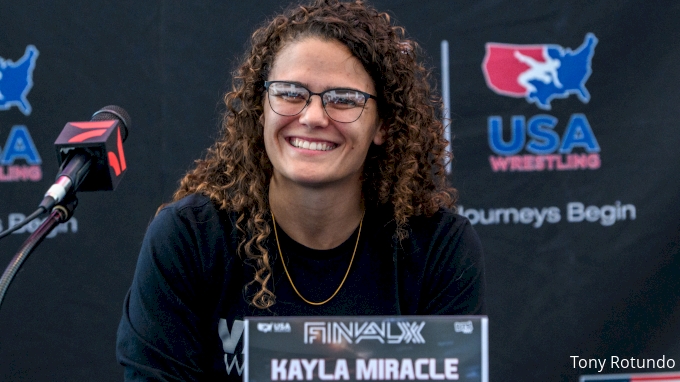
Two-time Olympian Kayla Miracle is a high school math teacher at Valiant College Prep in Phoenix, Arizona.
Motivation
Boyd: “I’ve never wrestled for attention. I genuinely love this sport. If I were in it for the money, I would not be in women’s wrestling. I just want to be the best, and I feel like if I keep chasing my goals, it’ll eventually come.
"The hard part for me is I’ve made four age-level World teams, and I’ve been a medalist two times, and just made a Senior National Team, and I don’t have much funding now because North Central is Division III, so they don’t have a bunch of money. Now I’m trying ways to raise money. I truly believe that I’m right there. I’ve had this dream since I was four years old, when I started, and I’m just not ready to stop chasing after it yet."
Ryan: “All this work, all the stuff that I do, is just for wrestling. It’s hard to make it work with clients and two jobs. With camps, I’m impacting a bunch of different people. I keep reminding myself that the reason I do this is for wrestling. I work those jobs, and I’m really busy right now wrestling. Everything I do is for wrestling. That’s how I’ve always lived. That’s what drives me when I work long shifts and go from one job to another. I remind myself that this is for wrestling, and that’s how I get through it."
Howk: “I love wrestling. I’ve done it my entire life. I love the community. To travel the world to do a sport that I love. I believe this is my platform. These are the gifts and abilities that God has given me. There are a lot of things, but it comes down to I love this sport. It’s a grind. It’s hard, but in the end it’s always worth it."
Piearcy: “I came back to senior-level wrestling to fall back in love with the sport. I lost sight of wrestling for myself and being the best person on and off the mat. Falling back in love with the sport, doing the best that I can, meeting amazing people, overcoming some of the mental blocks that I have, and just proving to myself that I am more than capable of what I originally thought I could do.”
Nette: “There is a six-year-old me that had no idea that we would be doing this today. The second thing that drives me is my dad. My dad has always driven me. He’s the one who introduced me to the sport, and it’s funny to look back on because all along, he knew that I had the capabilities and still believed that I had the capabilities.
“It’s pretty cool that he made this dream possible. That’s probably what drives me the most. I still have dreams that I haven’t fulfilled. My dad’s passing made me realize that we don’t have much time to do this. WCAP gave me an opportunity, and sometimes all I needed was an opportunity to realize I have a short amount of time to do this."